Welcome to Our Company!


 Send Inquiry
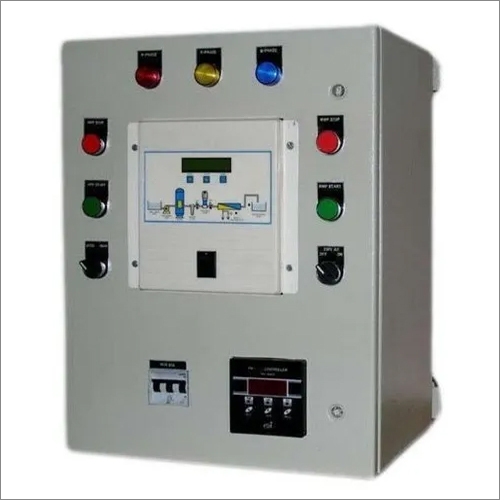
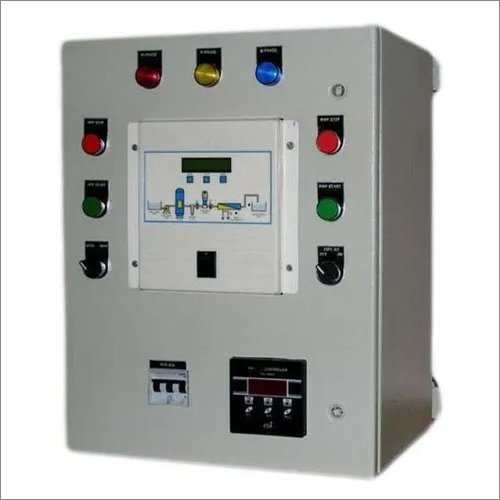
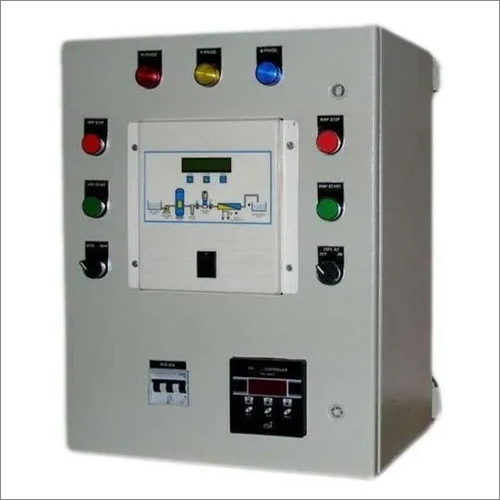
Reverse Osmosis Plant Controller
Price 7500 INR/ Piece
MOQ : 1 Piece
Reverse Osmosis Plant Controller Specification
- Motor Power
- Up to 5 HP (optional as per design)
- Features
- Digital display, Indicator lights, Push buttons, Automatic/Manual mode selection, Protection for pumps and valves, User-friendly interface, Error indication
- Noise Level
- Low
- Size
- Standard/Customizable
- Usage & Applications
- Used for fully automatic operation & control of Reverse Osmosis water treatment plants
- Shape
- Rectangular
- Capacity
- Supports up to 5000 LPH plant capacity (can be customized)
- Surface Finish
- Smooth, Powder Coated
- Drive Type
- Electric Drive
- Product Type
- Machine Parts
- Material
- Mild Steel
- Technology
- Microcontroller-Based Automation
- Power Source
- Electric
- Power
- Up to 5 kW (Depends on Control Panel configuration)
- Voltage
- 415 Volt (v)
- Pressure
- Suitable for RO plant pressure requirements
- Surface Treatment
- Coated
- Dimension (L*W*H)
- 500 x 400 x 250 mm (Approximate)
- Weight
- 10-15 kg (Approximate)
- Color
- Grey
- Ambient Temperature
- 0C to 50C
- Input Type
- Sensor based / Switch based
- Humidity
- Up to 95% RH, Non-condensing
- Indications
- Power ON, Pump ON, Low Pressure, High Pressure, Faults
- Mounting
- Indoor mounted
- Protection
- Overload, Short circuit, Dry run, Phase failure
- Connections
- Panel Terminals for Pump, Valve, Sensor and Alarm integration
- Control System
- Programmable logic controller
- Compatible For
- RO Plant, Water Treatment Systems, UF Plant
- Display Type
- Digital LED/LCD display
- Operation Mode
- Automatic/Manual selectable
- Panel Type
- Wall Mounted / Floor Mounted
- Input Supply Frequency
- 50/60 Hz
Reverse Osmosis Plant Controller Trade Information
- Minimum Order Quantity
- 1 Piece
- Payment Terms
- Cash in Advance (CID), Cash Advance (CA), Paypal
- Supply Ability
- 20 Pieces Per Month
- Delivery Time
- 3-6 Days
- Main Domestic Market
- Gujarat, Chhattisgarh, Maharashtra, Madhya Pradesh, Rajasthan
Reverse Osmosis Plant Controller About
A Reverse Osmosis Plant Controller is an electronic device that is designed to control and monitor the operations of a reverse osmosis (RO) water treatment plant. Reverse osmosis is a process that uses a semi-permeable membrane to remove dissolved solids, impurities, and other contaminants from water by applying pressure to it. The Reverse Osmosis Plant Controller helps to manage and optimize the various components of an RO system, including pumps, valves, pressure vessels, and membranes, to ensure optimal performance and maximum efficiency.
Advanced Control with Automation
Leverage the power of programmable logic controllers and microcontroller-based automation for precise, fully automatic, or manual control of your water treatment systems. The user-friendly interface makes switching modes effortless, while digital displays enhance operational visibility.
Robust Protection & Durability
This controller ensures safety with comprehensive protection against overload, short circuit, dry run, and phase failure. Housed in a powder-coated mild steel panel, it offers long-term durability and stable performance even under challenging environmental conditions.
Versatile Application & Reliable Operation
Engineered for compatibility with a range of water treatment systems including RO plants and UF plants, the unit's flexible connectivity, customizable capacities, and visual indicators for faults and status create an efficient, low-noise operational environment.
FAQ's of Reverse Osmosis Plant Controller:
Q: How does the Reverse Osmosis Plant Controller improve operational efficiency?
A: The controller uses a programmable logic system and microcontroller-based automation to manage pump and valve operations, automatically responding to input from sensors or switches. This automation minimizes manual intervention, ensures consistent water quality, and optimizes plant performance.Q: What protections does the controller provide for critical components?
A: It offers comprehensive protection features including overload, short circuit, dry run, and phase failure-safeguarding pumps, valves, and electrical circuits from damage and reducing the risk of costly downtime.Q: When should I opt for automatic versus manual operation mode?
A: Automatic mode is ideal for routine operation and minimizes the need for operator attention, making it suitable for day-to-day running. Manual mode is beneficial during maintenance, troubleshooting, or when direct control is necessary.Q: Where can the controller panel be installed in my facility?
A: The panel is designed for indoor mounting and can be wall-mounted or floor-mounted, depending on space availability and operational convenience within your water treatment system infrastructure.Q: What is the installation and connection process for pumps, valves, and alarms?
A: The panel features dedicated terminal connections for pumps, valves, sensors, and alarms. Installation is straightforward, with clear labeling to guide proper wiring and integration with your existing equipment.Q: How do the error indications and display features benefit the operator?
A: Digital LED/LCD displays provide real-time system data and status messages, while indicator lights and error signals promptly alert operators to any faults, enabling swift diagnosis and reducing downtime.Q: What are the main benefits of using this controller for RO and water treatment plants?
A: Key benefits include enhanced operational safety, easy mode selection, user-friendly interface, protection for pumps and valves, customizable plant capacity, low noise, and reliable control-all contributing to efficient and trouble-free water treatment operations.
Tell us about your requirement

Price:
Quantity
Select Unit
- 50
- 100
- 200
- 250
- 500
- 1000+
Additional detail
Mobile number
Email

More Products in Reverse Osmosis Plant Parts Category

SS Filter and Bag Housing
Price 19500 INR / Piece
Minimum Order Quantity : 1 Piece
Material : Mild Steel
Surface Treatment : Galvanized
Weight : Approx. 1530 kg depending on model
Color : Silver

RO Control Panel
Price 7500 INR / Piece
Minimum Order Quantity : 1 Piece
Material : Mild Steel
Surface Treatment : Coated
Weight : 50 Kilograms (kg)
Color : Grey

Contact Details

- A-18, Tirth Bhumi Industrial Estate-2, Bakrol- Gatrad Road,Ahmedabad - 382433, Gujarat, India
- Phone : 08045803582
WATER PURE FILTRATION
GST : 24BLIPP0499Q1ZA

- Mr Jayesh Patel (Proprietor)
- Mobile : 08045803582
-
 Send Inquiry
 Send Inquiry


WATER PURE FILTRATION
All Rights Reserved.(Terms of Use)
Developed and Managed by Infocom Network Private Limited.
Developed and Managed by Infocom Network Private Limited.


 English
 Spanish
 French
 German
 Italian
 Chinese (Simplified)
 Japanese
 Korean
 Arabic
 Portuguese
